I was still a little girl when the disturbing news that “Grandma was going to die” began to circulate quietly in the courtyard of our house in Vietnam. So I went to ask her directly: “Grandma, is it true that you're going to die?” ”Yes, it's true,“ she replied. And in a calm voice, she added, ”But my granddaughter, we die a little every day. "
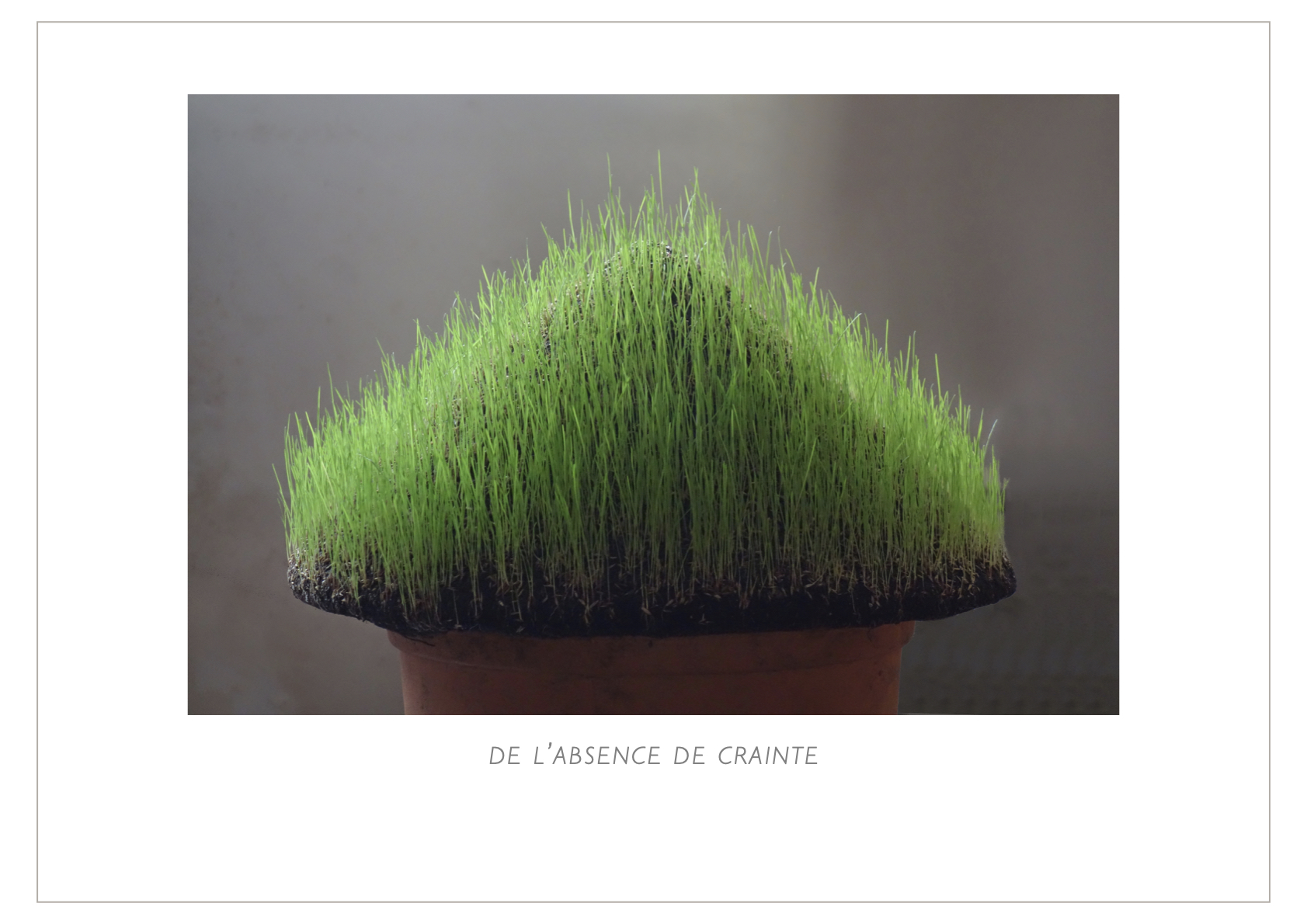
The title De l’absence de crainte (On the Absence of Fear) evokes the relief I felt at Grandma's response.
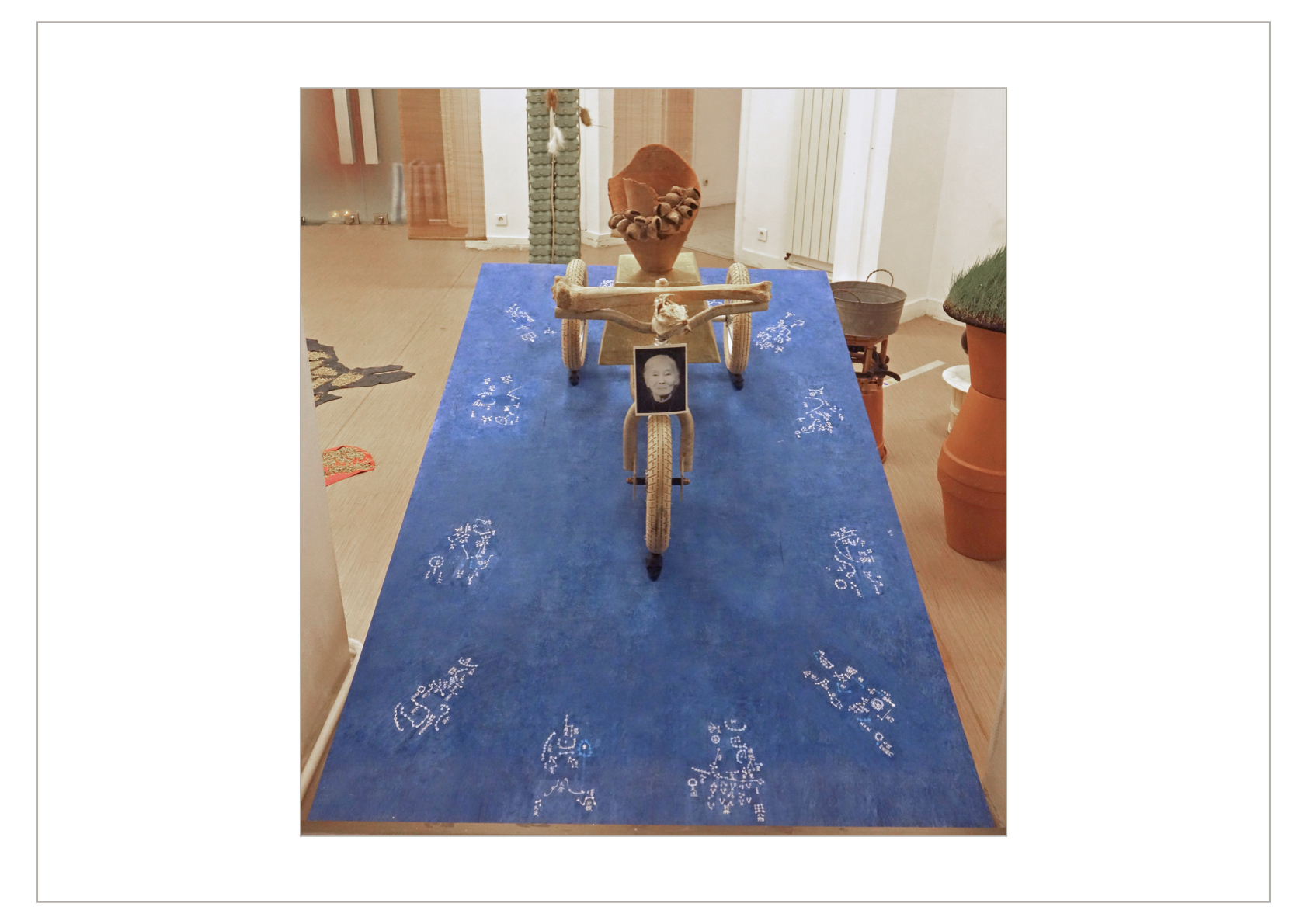
The design of the work represents a staging of her life in her environment in northern Vietnam. Miscellaneous items found here and there were used for their tactile qualities and their connection to the subject. The ultimate desire is to transpose them into a poetic form.
The installation is both a tribute to Mémé's memory and a celebration of the funeral she did not have when she died at the age of 93, shortly after our repatriation to France in 1956.
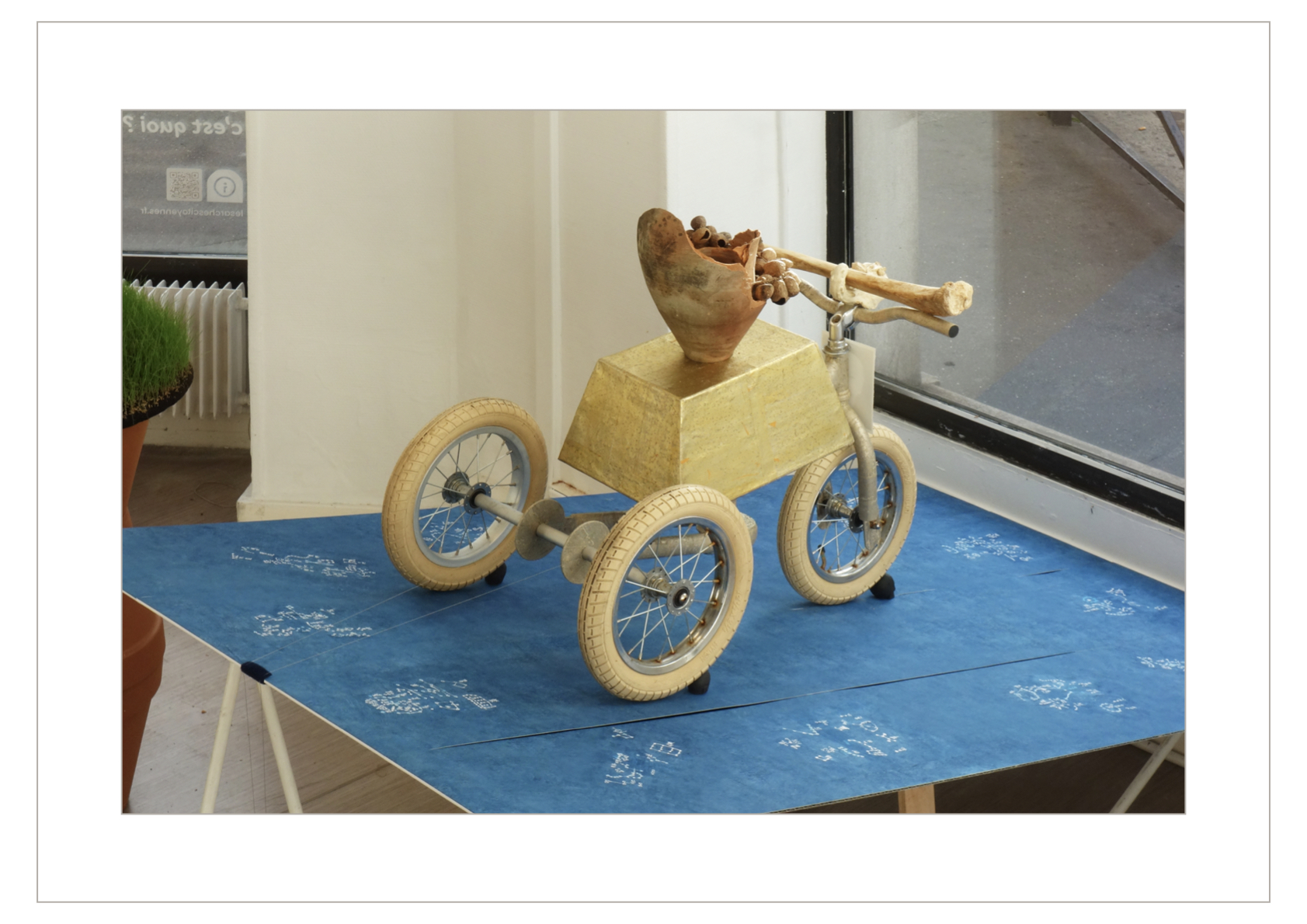
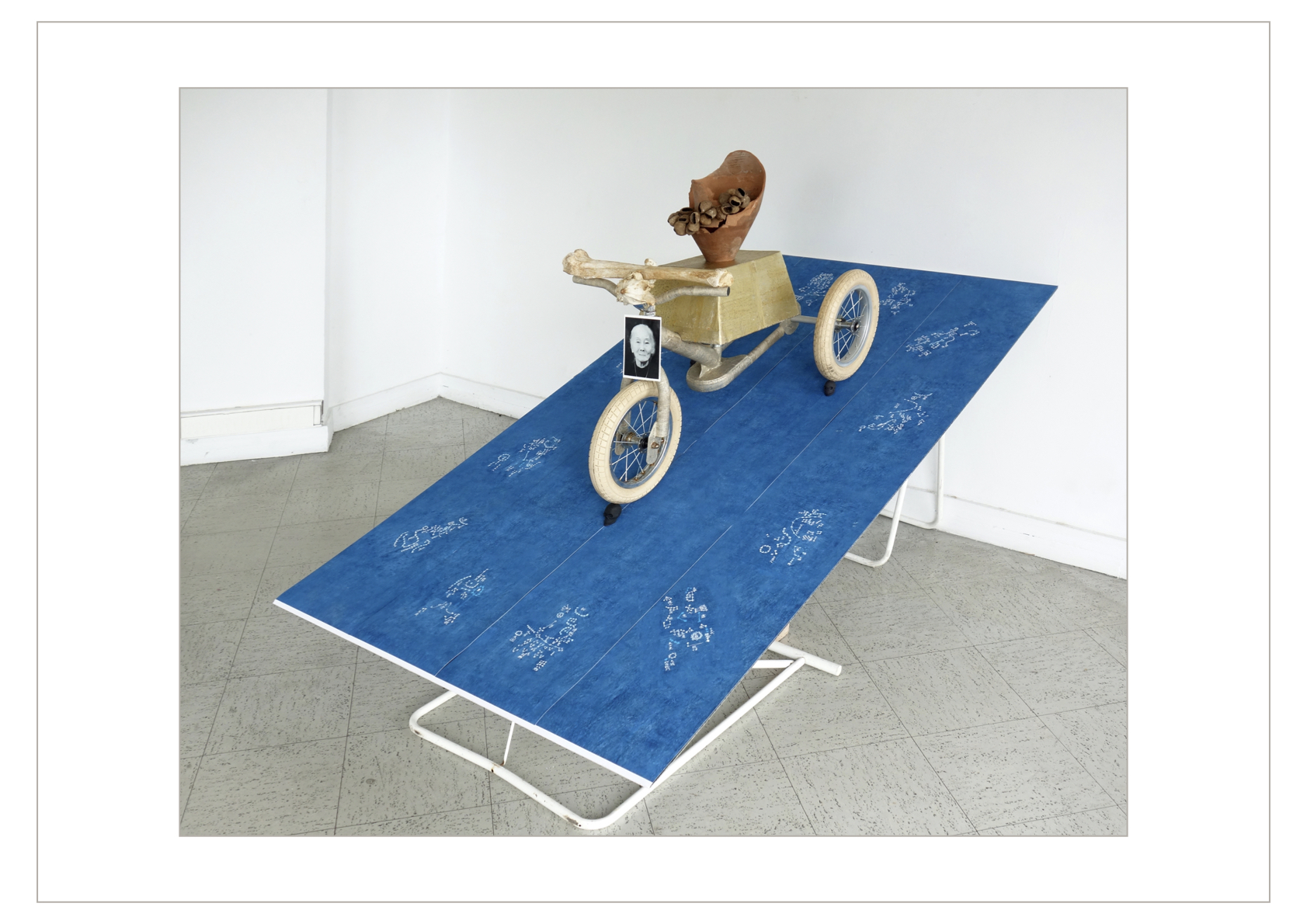
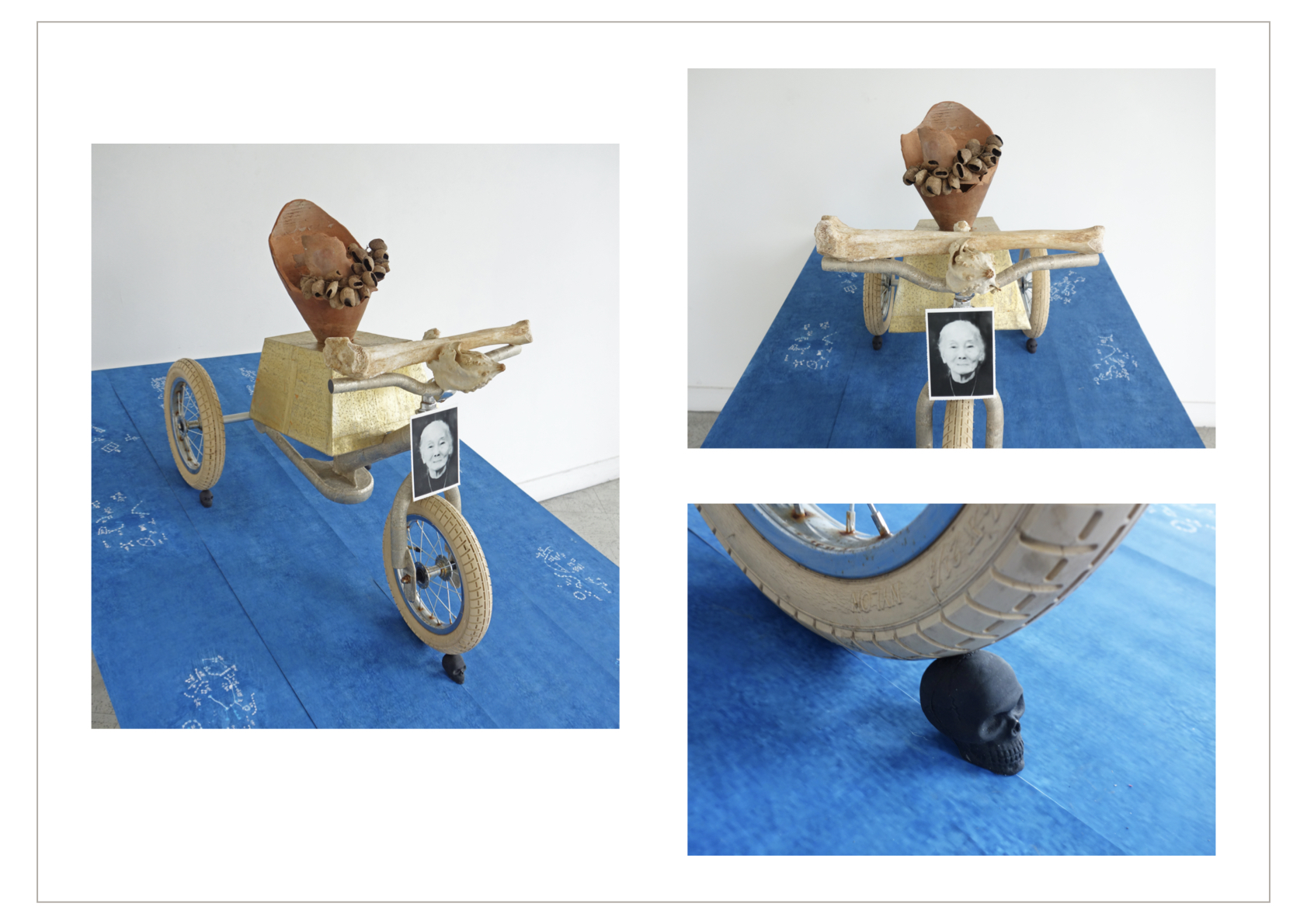
Physically, the installation De l’absence de crainte (On the Absence of Fear) presented at Les Vitrines des Arches in Paris was organized into three spaces visible through three display windows. The central space, the largest, represents a hearse for Mémé, made from a child's tricycle covered with silver and gold votive papers, placed on a Chinese celestial calendar showing the constellations.
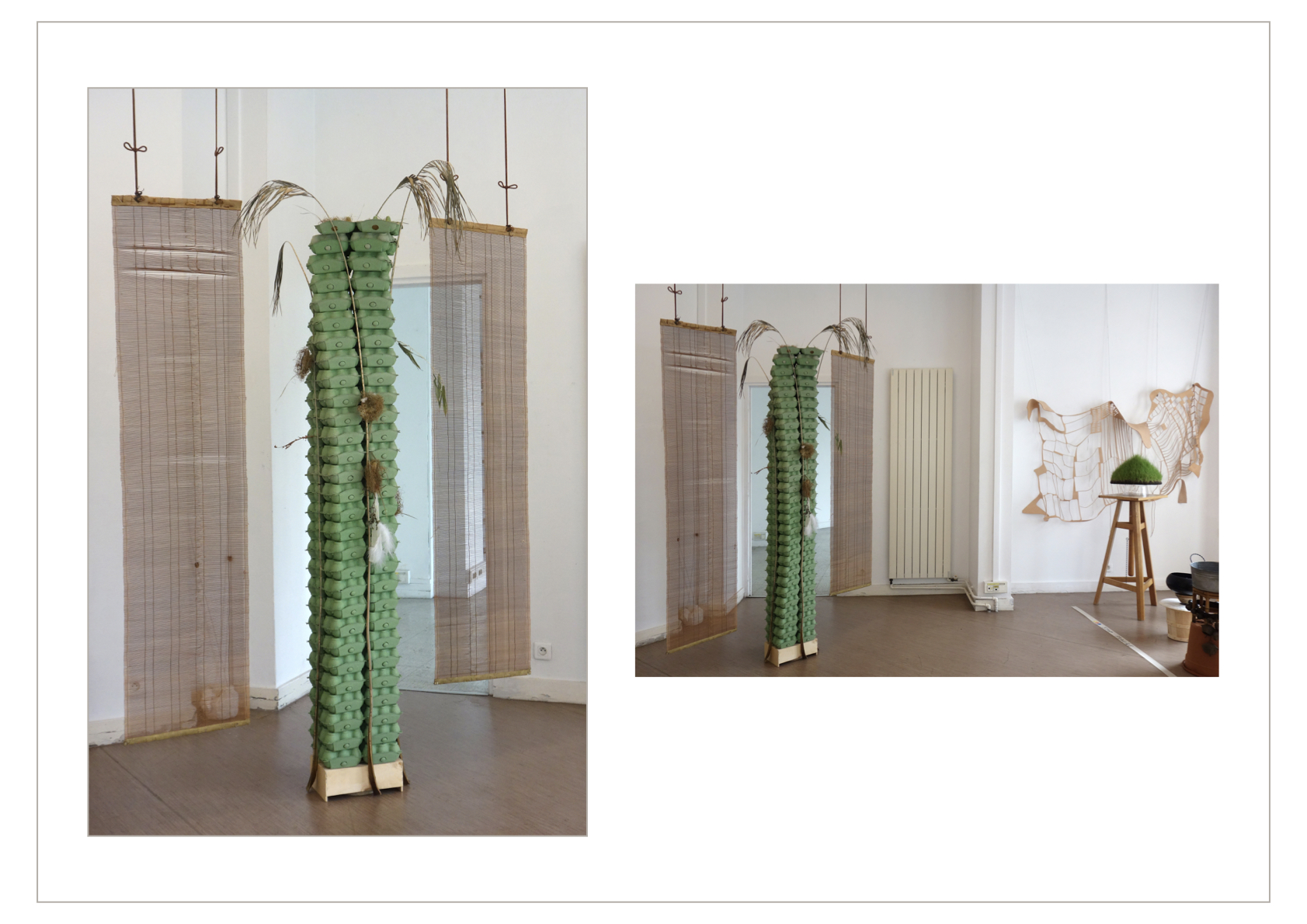
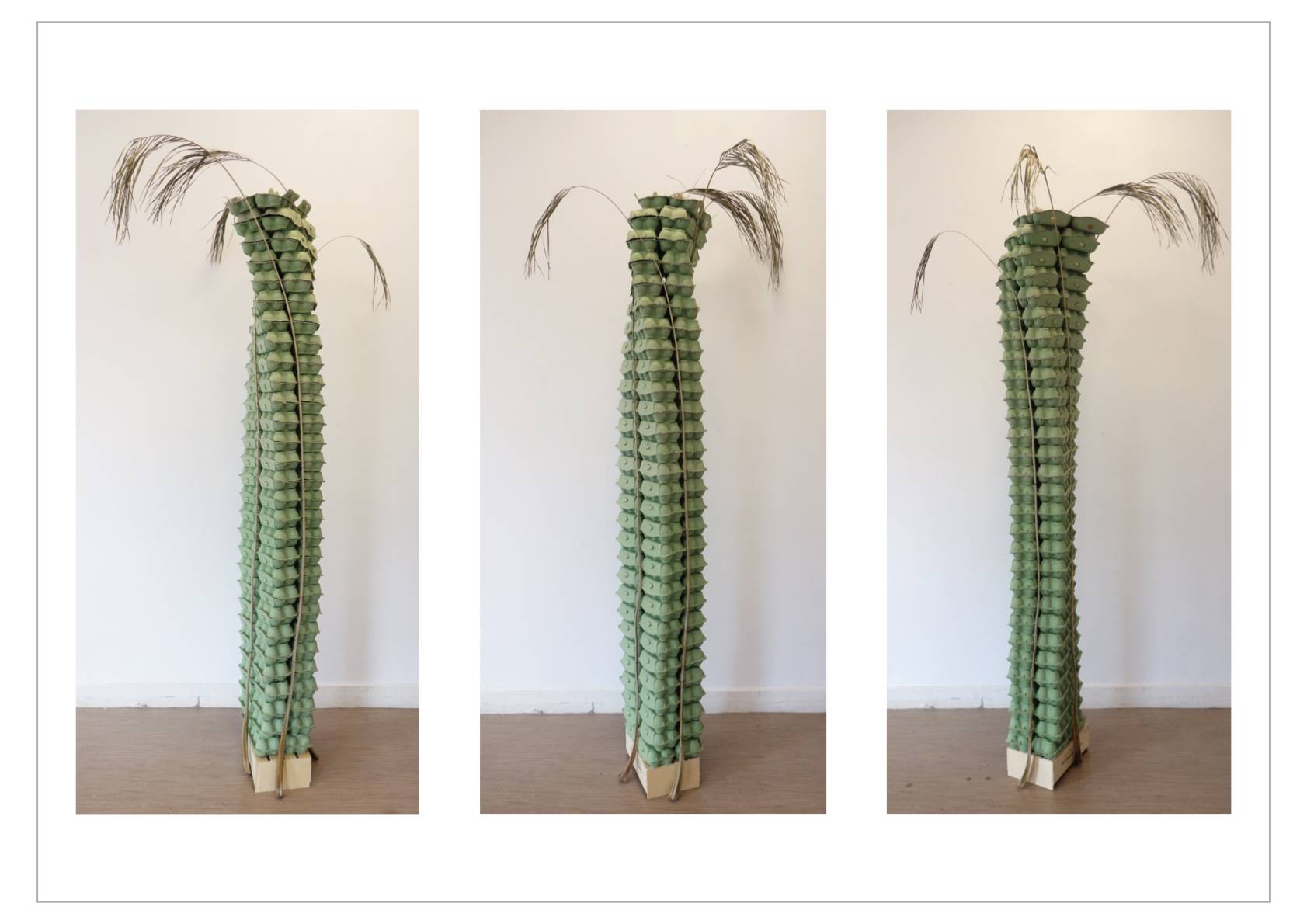
At the back of the central space, the column entitled Horizon unanime (Unanimous Horizon) is a construction made of stacked egg cartons held in place on each side by palm fronds. Two bamboo blinds evoke the rays of tropical light that made my naps with Mémé so enjoyable.
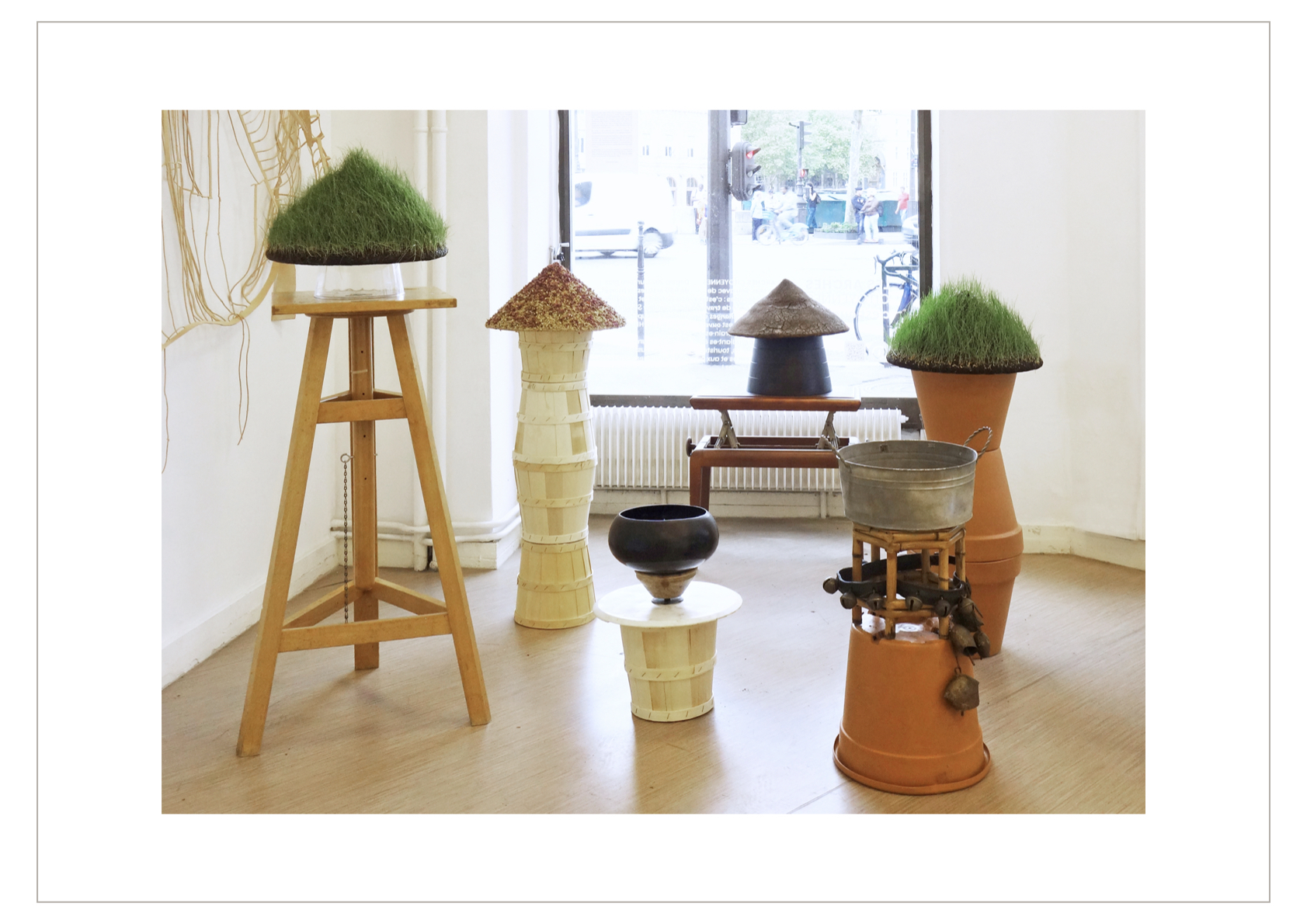
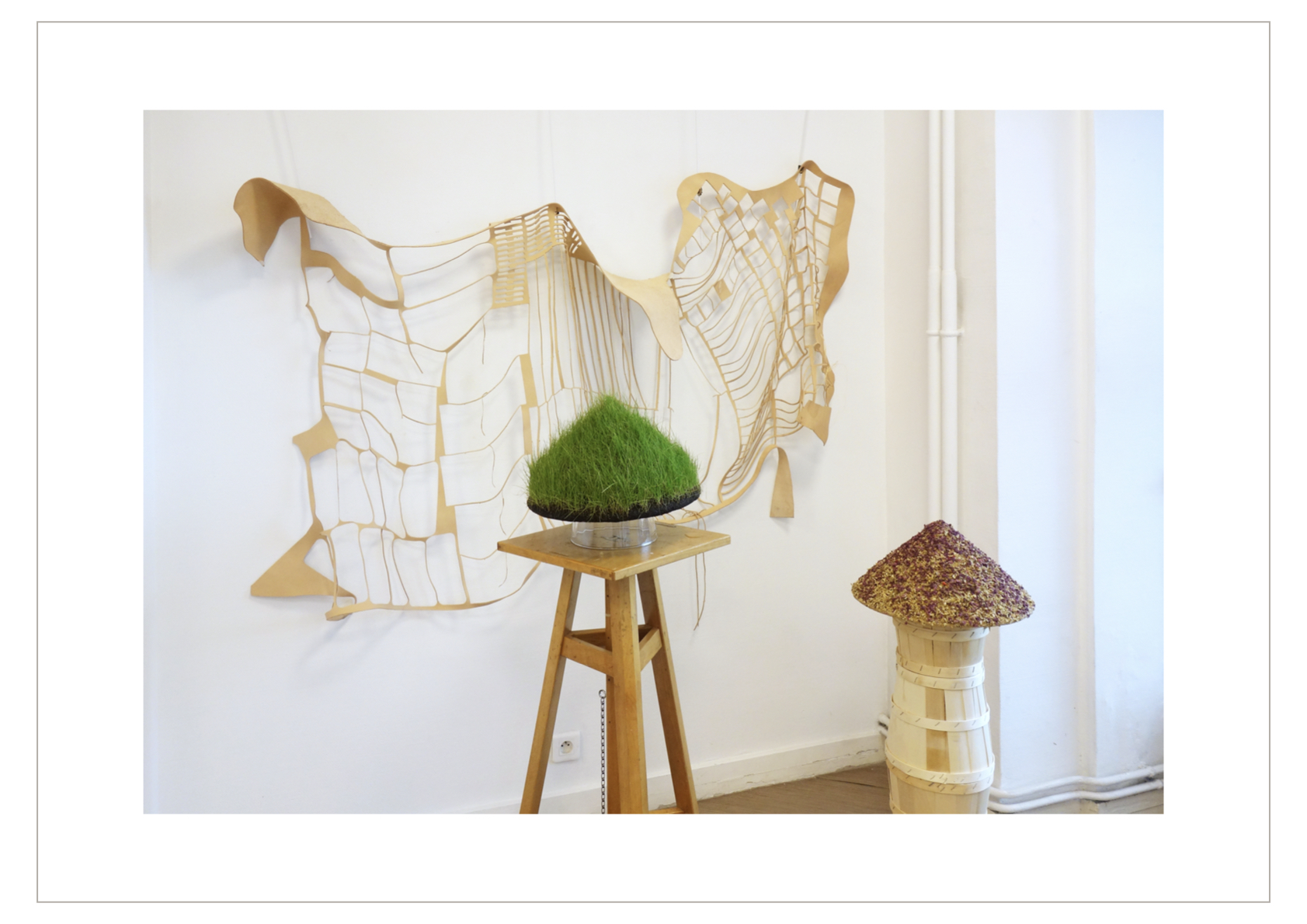
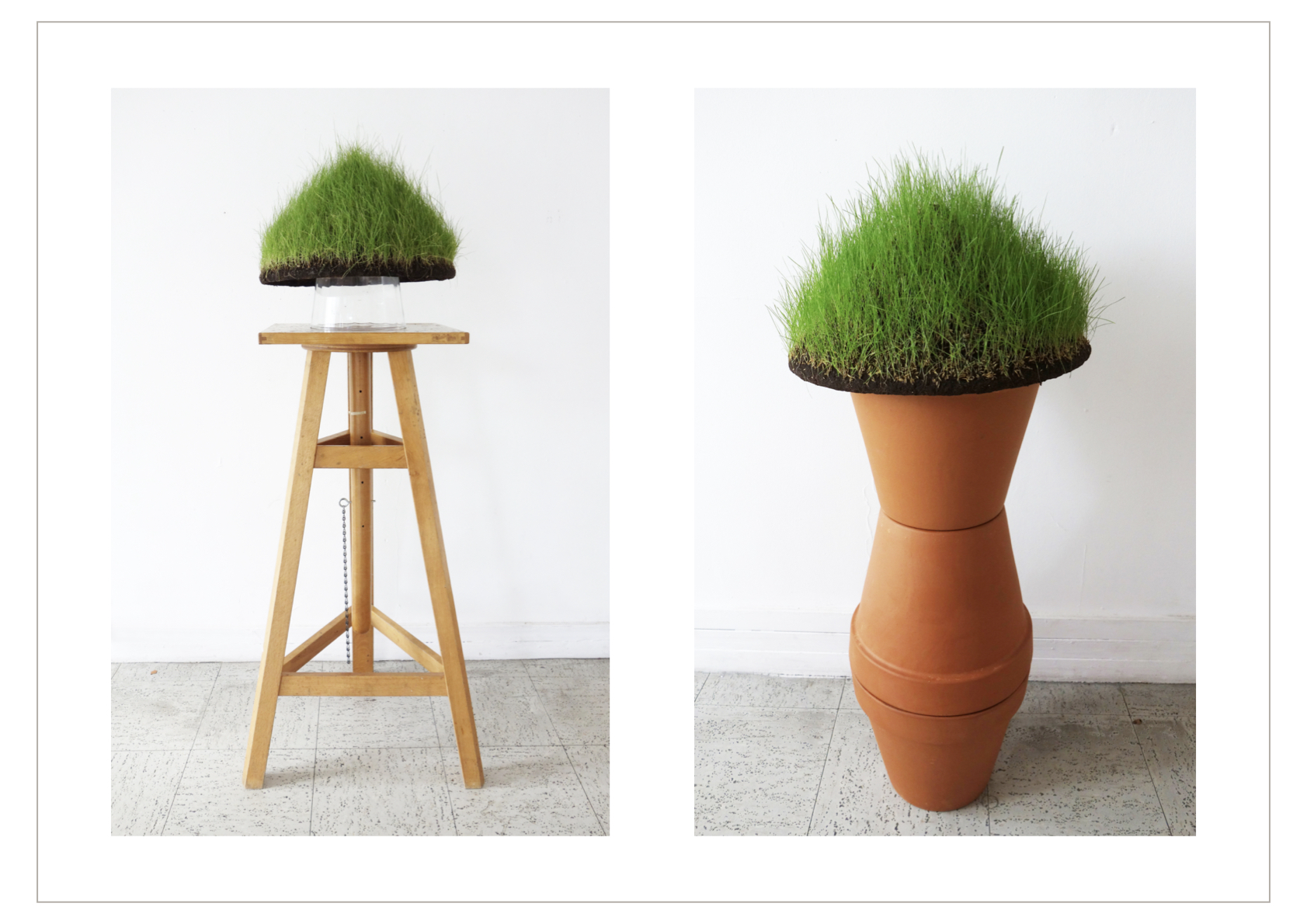
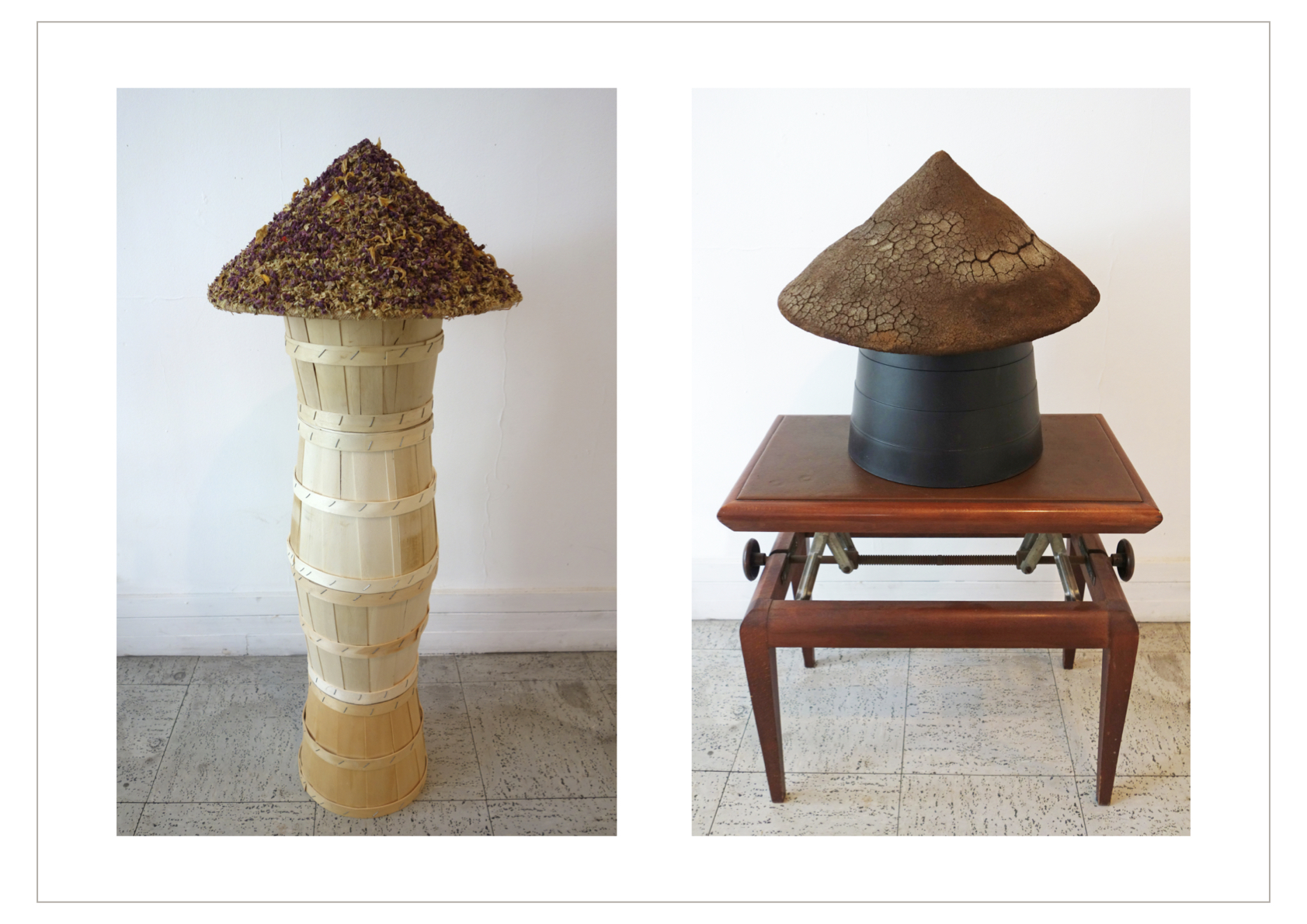
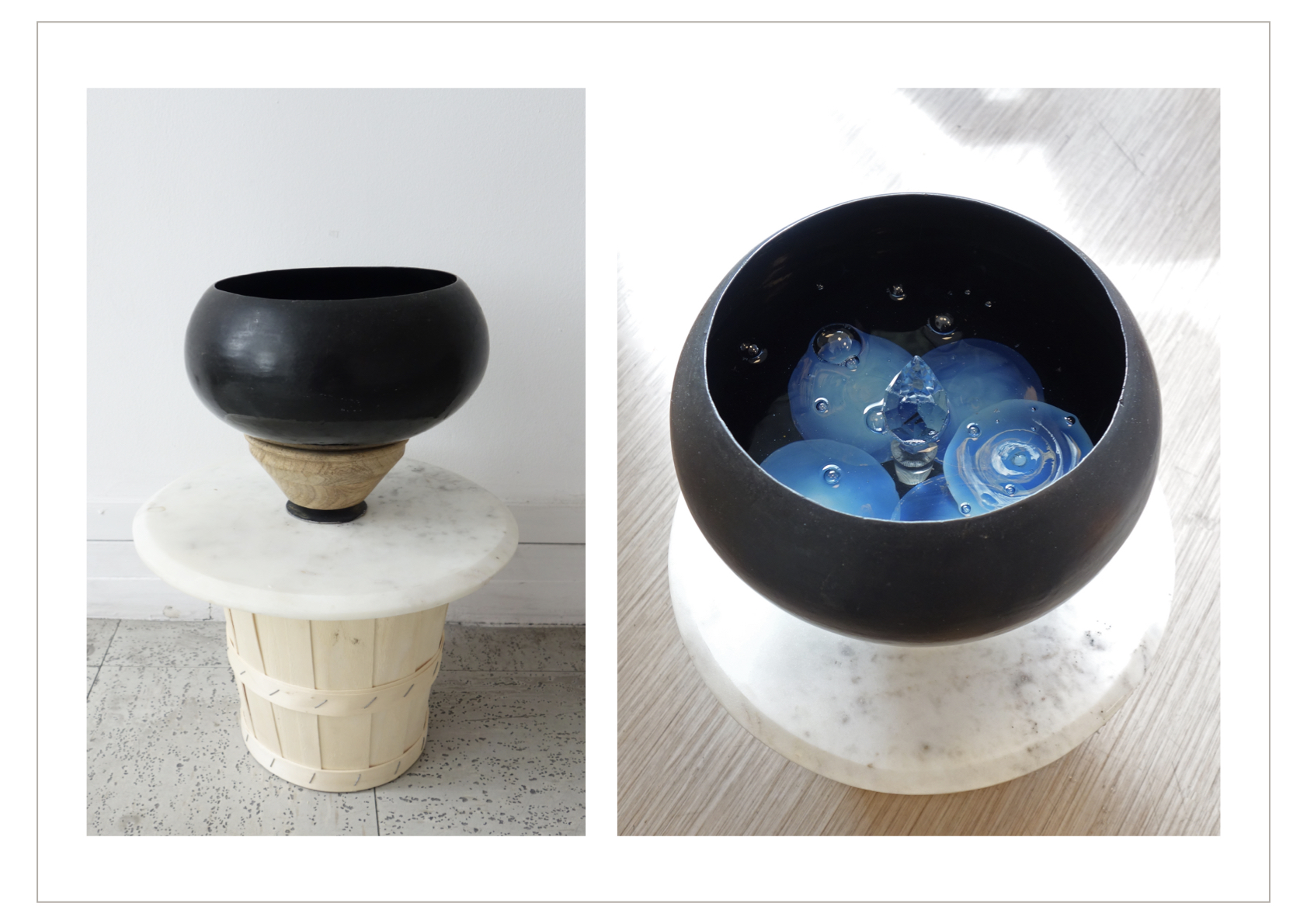
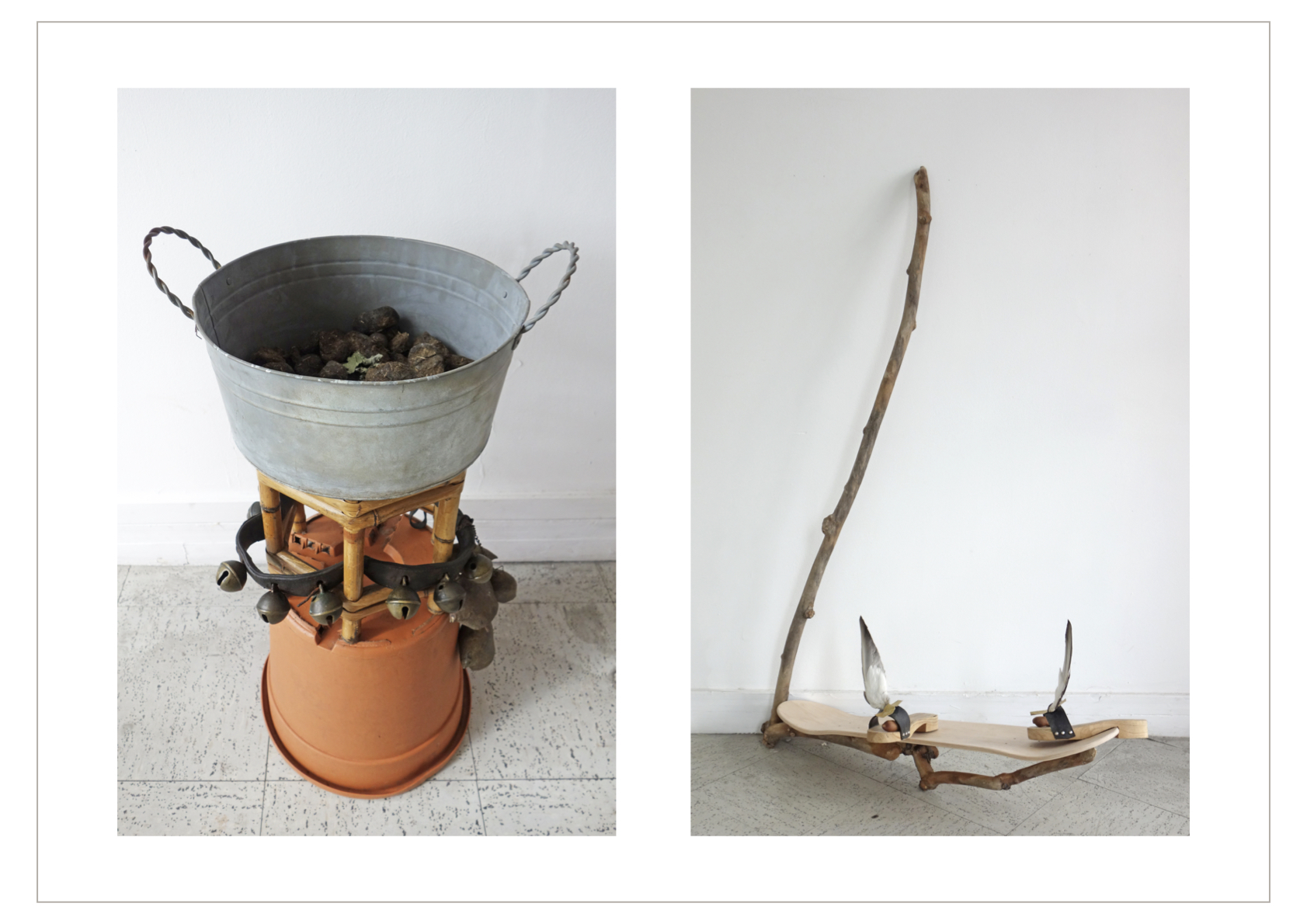
The space on the left evokes the plantation that Mémé managed alone for several decades after her husband's death; Vietnamese conical hats covered with flowers or coffee grounds evoke her main crops, tea and coffee. Other conical hats serve as supports for young grass shoots, becoming living sculptures as they merge with their bases. The presence of cattle manure serves as a reminder of the necessity of this fertilizer for growing coffee. A black lacquered bowl of water is an offering of opalescent leaves and crystal lotus flowers, symbols of awakening and rebirth.
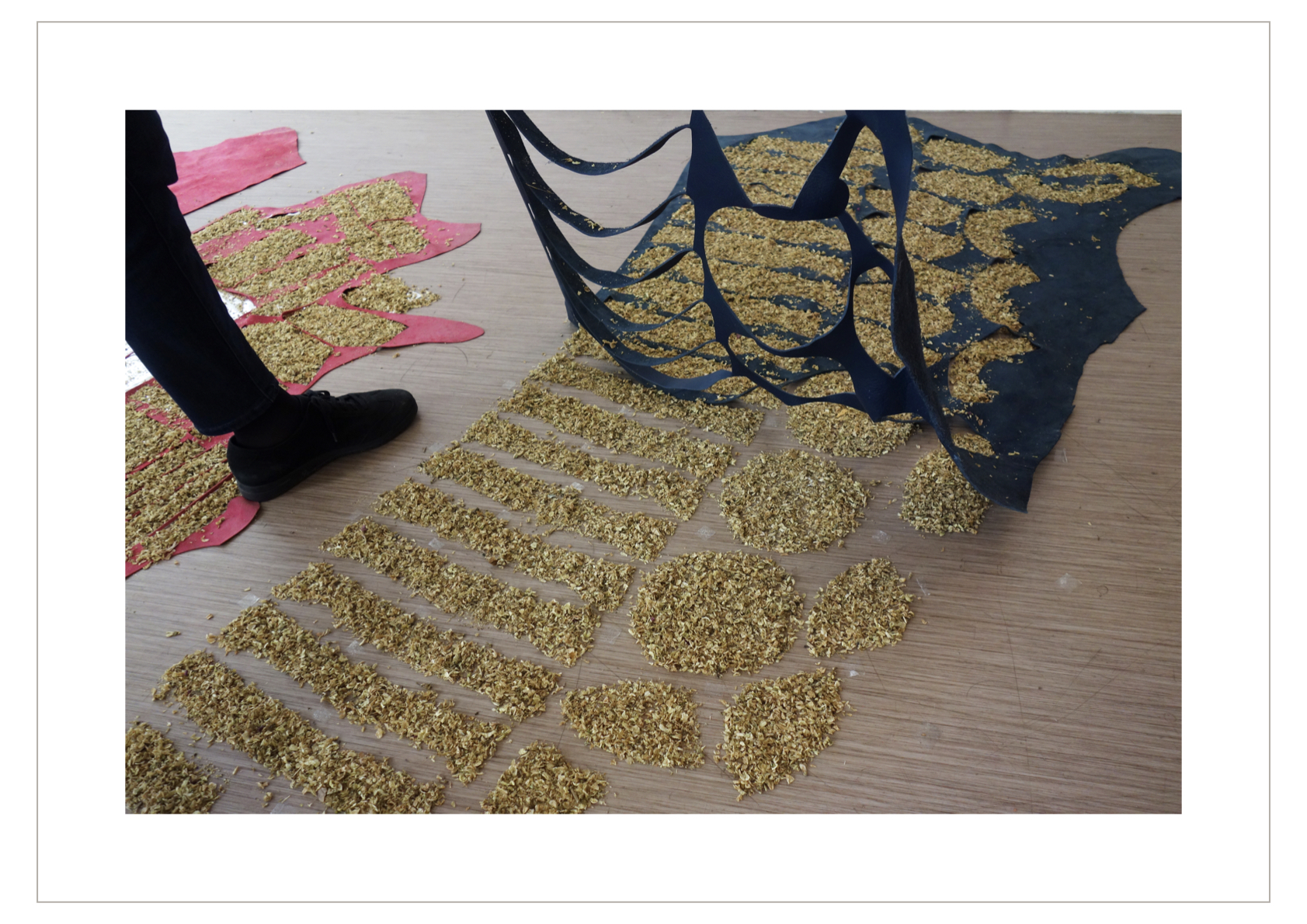
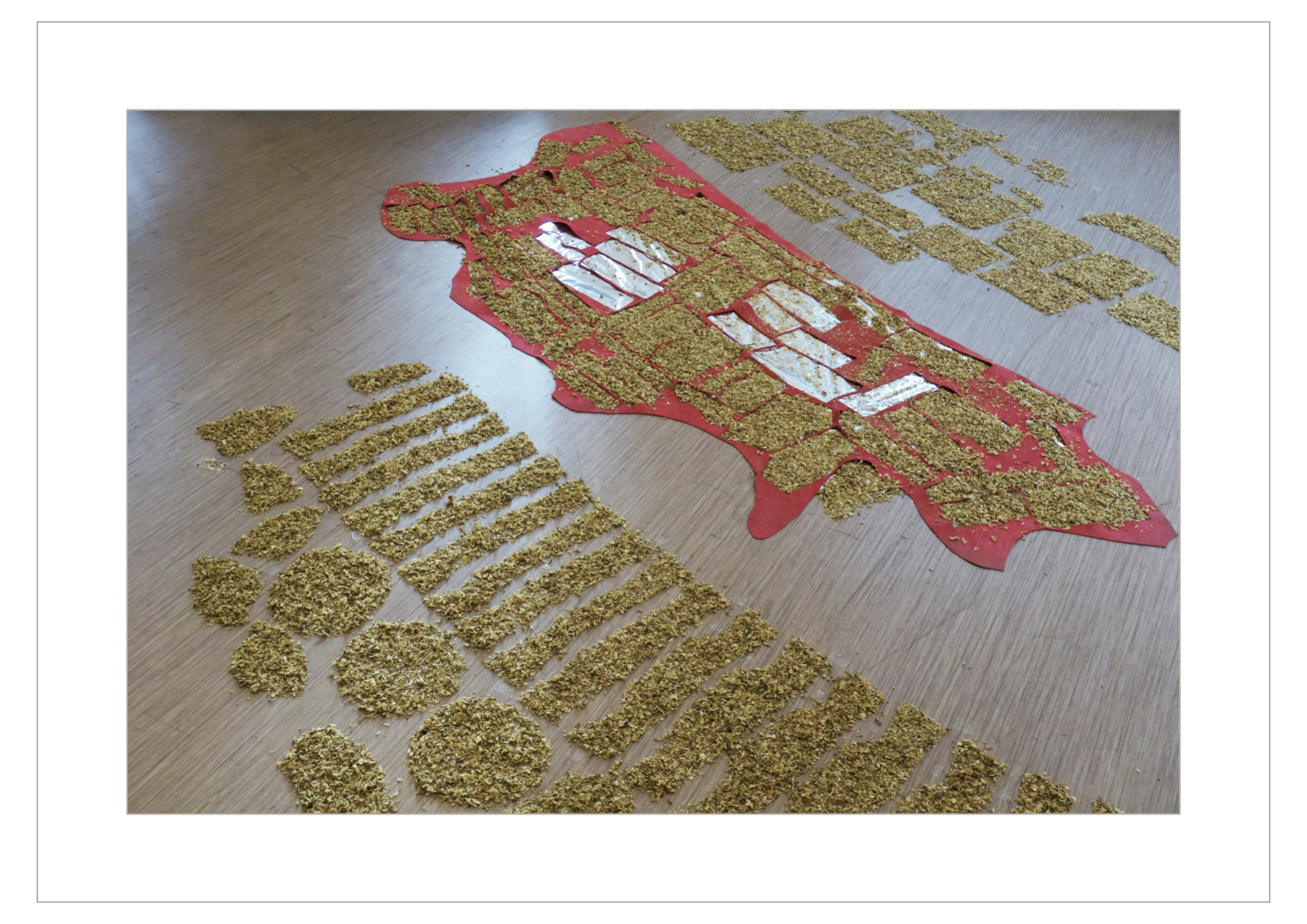
The space on the right represents an aerial view of Mémé's plantation, with its plots of sophora flowers depicting fields, delimited by “leather skeletons”, skins hollowed out with shapes cut out with die cutters.